Research Article | | Peer-Reviewed

On Farm Evaluation of Mulching Materials and Irrigation Methods on Water Productivity and Yield of Tomato

Published in Hydrology (Volume 13, Issue 4)
Received: 12 November 2025     Accepted: 24 November 2025     Published: 26 December 2025
Views:       Downloads:
Abstract

The primary production barrier in the arid and semi-arid regions of the eastern Hararghe zone is the issue of irrigation water scarcity. The objective of this study was to evaluate the effect of irrigation methods and mulching materials on water productivity, water retention and yield of tomato crop. The experiment was laid out in factorial design arranged in RCBD consisting of six treatments with three replication. The treatment combination were Conventional Furrow Irrigation with white plastic mulch (CFI+WPM), Conventional Furrow Irrigation with grass mulch (CFI+GM), Conventional Furrow Irrigation with no mulch (CFI+NM), alternative furrow irrigation with white plastic mulch (AFI+WPM), alternative furrow irrigation with grass mulch (AFI+GM) and alternative furrow irrigation with no mulch (AFI+NM). The finding shown that, Maximum yield (33.68 t/ha) was obtained by conventional furrow irrigation with grass mulch treatment while the lowest yield of 22.08 t/ha was obtained by alternative furrow irrigation with no mulch treatment. The study revealed that, Maximum water productivity (12.636 kg/m3) was obtained by application of alternative furrow irrigation with grass mulch treatment. Even though maximum yield was obtained by treatment of conventional furrow irrigation with grass mulch, irrigation water productivity of this treatment was not more attractive due to high consumption of irrigation water by conventional irrigation method. The economic analysis of this finding shown that, maximum benefit cost ratio (BCR) was obtained by alternative furrow irrigation with grass mulching treatment. In terms of increasing water holding capacity of the soil, white plastic mulch with conventional furrow irrigation produce maximum water retention. From the result minimum water retention was obtained by alternative furrow irrigation method with no mulch treatments. Based on result obtained, application of grass mulch with alternative furrow irrigation method was recommended as best technology for improving irrigation water productivity. Since grass mulch is applicable in both cost and availability, it should be practiced by all irrigation users.

Published in Hydrology (Volume 13, Issue 4)
DOI 10.11648/j.hyd.20251304.13
Page(s) 234-241
Creative Commons

This is an Open Access article, distributed under the terms of the Creative Commons Attribution 4.0 International License (http://creativecommons.org/licenses/by/4.0/), which permits unrestricted use, distribution and reproduction in any medium or format, provided the original work is properly cited.

Copyright

Copyright © The Author(s), 2025. Published by Science Publishing Group

Keywords

Irrigation Method, Mulching Materials, Water Productivity, Tomato

1. Introduction
Water shortage is one of the major problems limiting crop productivity in arid and semi-arid regions . The unproductive evaporation from soil root zone is a major source of moisture loss in the world arid and semiarid regions . Minimizing huge amount of irrecoverable losses of water is very crucial and if achieved can play an important role in contributing soil moisture conservation for optimum crop growth in limited water regions . In order to reduce the evaporation rate, adopting suitable soil management techniques like mulching recommended . Mulch is a protective layer of either organic or inorganic material that is spread on the top soil: to reduce the moisture loss from the soil by preventing evaporation from sunshine and desiccating winds, to prevent weed growth, to improve soil condition, to provide home for earthworms and natural enemies found in the soil and reduce soil compaction from the impact of heavy rains .
Organic mulches such as straw, grass or leaf matter can provide multiple benefits for organic farms . They are capable of suppressing weeds, regulating soil moisture and soil surface temperatures . They improve overall soil quality by increasing organic matter of the soil, soil porosity, and water holding capacity while also stimulating soil life and increasing nutrient availability . Additionally, based on a variety of climate change models, scientists predicted that agricultural losses from growing aridity would rise in many parts of the world in the future . In Ethiopia climate change is expected to significant impact on crop production .
In Ethiopia, lack of integrated water management practices are among the major constraints and challenges identified in the area of irrigation water and crop management practices . Various strategies have been proposed to reduce the agricultural water losses, including to minimization of evaporation (E) to reduce evaporation and transpiration (ET), improving irrigation methods and optimizing irrigation schedule . Improvements in water use efficiency (WUE) of crops are essential under all water scarcity scenarios .
The application of mulch is known to be effective in reducing soil evaporation, saving water, moderates soil temperature, optimize water infiltration rate, control run-off and erosion, suppress weed growth, and conserve the soil moisture content and enhancing water use efficiency .
Plastic mulch is widely used as a low-cost measure to improve water retention in the soil, increase soil temperature and reduces soil evaporation . Combined practice of partial root zone drying and mulching appears to be very promising among the water management practices for increasing WUE especially at field scale . In spite of its importance in semi-arid areas, such types of studies have not been conducted in the study area. Water shortage and high demand of water are increasing in the arid and semi-arid area of Eastern Hararghe for crop production due to increasing competition for irrigation water. Under such condition, water saving agriculture and on farm moisture conservation and utilization techniques is vital and need an emphasis in order to improve water productivity and sustain agricultural production. So the activity was done with the general objective of evaluating the combined effect of mulching materials and water application method on yield and water productivity of tomato. Whereas evaluation of the economic visibility of mulching materials and water application method on yield and water productivity of tomato were the specific objective of this activity.
2. Materials and Methods
2.1. Experimental Site Description
The experiment was conducted at Erer Kebele, Babile District of Estern Hararghe zone of Oromia located at 09° 10’ 41.5” north latitude, 042° 15’ 27.3” east longitude with elevation of 1274 m a.s.l. From meteorological station, the average minimum temperature, average maximum temperature and average annual rain fall were 15.08°C, 31.33°C and 672.59 mm respectively. The textural soil type of study area was Sandy loam.
2.2. Experimental Design and Treatment Setting
The experiment was laid out in factorial design arranged in Randomized Complete Block Design (RCBD) consisting of six treatments with three replication. The treatment combination were Conventional Furrow Irrigation with white plastic mulch (CFI+WPM), Conventional Furrow Irrigation with grass mulch (CFI+GM), Conventional Furrow Irrigation with no mulch (CFI+NM), alternative furrow irrigation with white plastic mulch (AFI+WPM), alternative furrow irrigation with grass mulch (AFI+GM) and alternative furrow irrigation with no mulch (AFI+NM). There were 18 experimental plots and the sizes of each plot were 3 m*5 m dimension. The space between plot and block were 2 m.
Land Preparation and Crop Management Practice
Tomato crop was used as seed material. Seedling developed at the nursery was watered and uprooted for transplanting. The land was plowed and leveled using a tractor to make it suitable for laying the experiment and to create a suitable slope for the experiment. After the land is leveled, ridge preparation had been done with ridge maker, spaced at 60 cm using a tractor and manually by hand. Both white plastic mulching and grass mulch were fully spread on the top of the soil manually by hand. Tomato crop was planted by making small hole in mulching materials. Irrigation water was applied in the furrow under those mulching materials.
Each treatment received an equivalent application of UREA and DAP at rates of 100 kg/ha and 200 kg/ha, respectively . The fertilizer dose per plot was calculated to plot level and applied for each plot. Fertilizer was applied by drilling in a single row by 5 cm far away from the root of tomato. First, weeding was done after 15 days of transplanting, and then weeding was done as required, as there is any weed in the field was seen. was also done two times, during the second urea fertilizer application and head formation, and then hoeing was done as required. There were pests and diseases in the areas of the experiment. To protect the experiment both bacticide and pesticide chemicals (Proof, menchozem, and Ridomil Gold) were used according to their rate of application. To achieve the aim of trial tomato diseases and pests were controlled.
2.3. Soil Sampling
Soil samples were randomly gathered from three locations along the experimental field's diagonal prior to the start of treatments. Four depths were used to collect the samples (0-15 cm, 15-30 cm, 30-45 cm, and 45-60 cm). The soil samples collected were, air-dried, mixed, and sieved and analyzed for different physical and chemical characteristics. The soil properties analyzed include bulk density, water retention at field capacity (FC), permanent wilting point (PWP), soil texture, soil PH, organic carbon, and electrical conductivity of the soil.
2.4. Determination of Crop Water Requirement of Tomato
To determine tomato water requirements, long-term climate data records, including rainfall, maximum and minimum temperatures, wind speed, relative humidity, and sunshine hours, were gathered from the study area's meteorological station. The CROPWAT model version 8.0 was used to calculate the reference evapotranspiration (ETo) of tomatoes . The FAO Penman-Monteith technique formula is used by the CROPWAT model to compute ETo.
2.4.1. Determination of Net Irrigation Water Requirement
The net depth of irrigation supplied at any time is obtained from a simplified water balance equation as:
In=ETc-Pe(1)
Where;
In-Net Irrigation Depth (mm)
ETc- The Crop Water Requirement (mm) and
Pe -The Effective Rainfall (mm)
2.4.2. Application Efficiency and Gross Irrigation Depth
Application efficiency (Ea) is the ratio of water directly available in the crop root zone to water received at the field inlet. It is affected by the rate of supply, infiltration rate of the soil, the storage capacity of the root zone, and land leveling. Furrow irrigation could reach a field application efficiency of 70% when it is properly designed, constructed, and managed. The average ranges vary from 50 to 70%. However, a more common value is 60% (FAO, 2002).
Ig=InEa(2)
Where;
Ig-Gross Irrigation Depth (mm)
In-Net Irrigation Depth (mm) and
Ea- Application Efficiency (%)
Calculated gross irrigation was finally applied to each experimental plot based on the proportion of the treatment. The volume of water applied for every treatment was determined from the plot area and depth of the gross irrigation requirement. The time required to irrigate each treatment was calculated from the ratio of the volume of applied water to the discharge-head relation of 3-inch Parshall Flume. The time required to deliver the desired depth of water into each furrow was calculated using equation given by .
T=Ig*W*L6Q(3)
Where;
Ig = gross depth of water applied (cm)
T = Application Time (min)
W= Furrow Space of the Plot (m)
L= Furrow Length of the Plot (m)
Q= Flow Rate (l/s)
2.5. Water Productivity
Molden (1997) defined water productivity as crop yield per unit volume of water supplied to the crops. It is calculated by dividing crop output by the total amount of water applied. The ratio of tomato production to total irrigation depth applied to tomatoes over the season was used to determine water productivity in this research crop. It is stated as:
WP=YW(4)
Where, Y is tomato yield (kg/ha) and W is irrigation depth applied during the season (m3/ha).
2.6. Data Collection
To evaluate the effect of different irrigation method and mulching materials on tomato yield and water productivity, samples were collected from the central ridge to avoid border effects. Data on the growth parameters of tomato were recorded from five randomly selected plants in three middle rows of each experimental plot. Data on total yield and marketable yield of tomato was collected from three central rows by leaving the border effect on both sides from each experimental plot.
2.7. Economic Water Productivity Analysis
By taking into account the overall link between crop water use and crop output per hectare of land at the various treatments, the partial budget analysis was utilized for economic water productivity analysis. Partial budget analysis based on the CIMMYT technique was used to examine each treatment's total revenue, total variable cost, total fixed cost, total cost, net income, and benefit-cost ratio (CIMMYT, 1988). Fixed and variable costs were the data used in the economic study. The costs of seeds, fertilizer, farm equipment, and chemicals are examples of fixed costs. The costs of materials, gasoline, irrigation water, and labor for each treatment are examples of variable costs.
For the calculation of total revenue, the average marketable yield of each treatment was taken and then adjusted by multiplying 10% following the procedure of CIMMYT. The assessment was undertaken to take the price of tomato at the local market. Based on the assessment done 1kg of tomato was 15 ETB at a time at field level. For calculation of labour cost, the price of human labor was 150 ETB in the field. For calculation of irrigation water cost for each treatment, the price of water was taken as 3 ETB/1000m3 . The price of white plastic mulch per hectare was 8000 ETB. Net income (NI) in ETB/ha, generated from tomato crop, was computed by subtracting the total cost (TC) in ETB/ha from the total return (TR) in ETB/ha obtained from tomato sale .
NI=TR-TVC(5)
TC is the sum of FC and VC. Benefit cost ratio (BCR) of each treatment was computed as the ratio of NI earned to the TC expended.
BCR= NI/TC(6)
2.8. Methods of Data Analysis
All collected data were subjected to GenStat software for the variance analysis. Mean comparisons was executed using least significant difference (LSD) at 5% probability level.
3. Result and Discussion
3.1. Analysis of Soil Physical Property of Experimental Site
Table 1. Analysis of Soil Physical Properties of the Experimental Site.

Layer depth (cm)

Particle size distribution

Soil textural class

PWP% by volume

FC% by volume

Bd (g/cm3)

Infiltration rate

Sand

Silt

Clay

0-20

75

11

12

Sandy loam

9.2

16.8

1.48

24 mm/hr

20-40

70

16

19

Sandy loam

12.6

21.1

1.50

40-60

65

12

20

Sandy loam

13.8

23.1

1.50

Average

70

13

17

Sandy loam

11.5

20.0

1.49

3.2. Crop Water Requirement of Tomato
The Seasonal crop water requirement of Tomato determined from long term climatic data was 461 mm. The maximum and minimum net and gross irrigation of each treatment was placed in the following Table 2 and vary between treatments according to their arrangement.
Table 2. Seasonal Irrigation Water Applied for Each Treatment.

Treatments

Total ETc (mm)

Total net irrigation (mm)

Total gross irrigation (mm)

CFI+WPM

461

461

768.33

AFI+WPM

461

230.5

384.16

CFI+GM

461

461

768.33

AFI+GM

461

230.5

384.16

CFI+NM

461

461

768.33

AFI+NM

461

230.5

384.16

* Where, AFI=alternative furrow irrigation, GM= grass mulch, WPW= white plastic mulch, CFI=conventional furrow irrigation and NM = no mulch
From the above Table, maximum gross irrigation was applied by conventional furrow irrigation method. Minimum amount of gross irrigation was applied by alternative furrow irrigation method since irrigable land was reduced by half than conventional furrow irrigation method.
3.3. Effect of Irrigation Method and Mulching Materials on Yield of Tomato, Water Productivity and Water Retention
The result on the Effect of irrigation methods with mulching treatments on Yield, water productivity and water retention were presented in Table 3 below.
Table 3. ANOVA of Different Treatment Effect on WP, Yield and Water Retention.

Treatment

Yield (ton/ha)

WP (kg/m3)

Water Retention

AFI+GM

28.89 c

12.636 a

17.31 c

AFI+WPM

26.39 d

11.559 a

17.96 c

AFI+NM

22.08 f

9.671 b

13.58 e

CFI+GM

33.68 a

7.369 c

19.11 b

CFI+WPM

30.42 b

6.657 d

20.78 a

CFI+NM

23.96 e

5.244 e

15.09 d

CV (%)

3.0

12.8

4.5

L. S. D

0.987

1.338

0.930

Where, AFI=alternative furrow irrigation, GM= grass mulch, WPW= white plastic mulch, CFI=conventional furrow irrigation and NM=no mulch, WP- water productivity.
ANOVA of total tomato yield shown that there was significant difference between the treatments. Maximum yield (33.68 t/ha) was obtained by conventional furrow irrigation with grass mulch treatment while the lowest yield of 22.08 t/ha was obtained by alternative furrow irrigation with no mulch treatment. The other treatments AF+GM, AF+WPM, CF+WPM and CF+NM produce yields of 28.89 t/ha, 26.39 t/ha, 30.42 t/ha and 23.96 t/ha respectively. The ANOVA revealed that application of mulching under different irrigation method significantly influence total tomato yield (Table 3).
The ANOVA on water productivity shown that there was significant difference between the treatments. The result shown that maximum water productivity (12.636 kg/m3) was obtained by application of alternative furrow irrigation with grass mulch treatment. Even though maximum yield was obtained by treatment of conventional furrow irrigation with grass mulch, irrigation water productivity of this treatment was not more attractive due to high consumption of irrigation water by conventional irrigation method. The result shown that, Minimum water productivity (5.244 kg/m3) was obtained by conventional irrigation with no mulching treatment. This implies that how mulching technology decide irrigation water productivity (Table 3).
The result on Water retention shown that there was significant difference (p<0.05) between different mulching and irrigation method treatments. Maximum water retention (20.78%) was obtained by application of conventional furrow irrigation with white plastic mulch (CFI+WPM) treatment while the lowest value 13.58% of water retention was obtained from alternative furrow irrigation with no mulch (AFI+NM). The result is in agreement with who report that, plastic mulching leads to conservation of the available soil moisture through reducing evaporation.
The result is also in agreement with who report that white plastic mulch has benefits in terms of sustainable agriculture, such as soil protection or avoiding weedicide pollution. The next maximum water retention was obtained by application of CFI+GM. From this result grass mulch produce maximum water retention next to white plastic mulch and in terms of yield grass mulch also produce maximum tomato yield (Table 3). Statistically there was no significance difference between alternative furrow with grass mulch and alternative furrow with white plastic mulch in terms of water retention (Table 3).
3.4. Effect of Irrigation Methods and Mulching Materials on Yield Components of Tomato
The result on the effect irrigation methods and mulching materials on yield and yield component of tomato like; total yield, the average tomato main branch and plant height were presented in Table 4 below.
Table 4. ANOVA of Irrigation Methods and Mulching on Yield and Yield Components of Tomato.

Treatment

Yield (ton/ha)

Number of Branch

Plant Height (cm)

AF+GM

29.03c

7.000b

50.78bcd

AF+WPM

26.94d

6.67b

51.67bc

AF+NM

22.50f

4.33c

43.00d

CF+GM

34.03a

8.67a

59.67a

CF+WPM

30.83b

7.00b

45.33cd

CF+NM

24.31e

5.67bc

55.00ab

CV (%)

3.1

12.4

8.2

L. S. D

1.59

1.47

7.60

The result indicate that, there was significant different between treatments in terms of both number main branch and plant height. The result shown that, maximum number of main branch and height were obtained at application of conventional furrow irrigation with grass mulch (CFI+GM) treatment. Statistically there was no significance difference between AF+GM, AF+WPM and CF+WPM in terms of plant height. In terms of number of main branch, no significance difference was observed between AF+GM, AF+WPM, CF+WPM and CF+NM. From this result, we can observe that application of mulching, especially, grass mulch had high contribution in increasing yield components of tomato which lead to increase total yield.
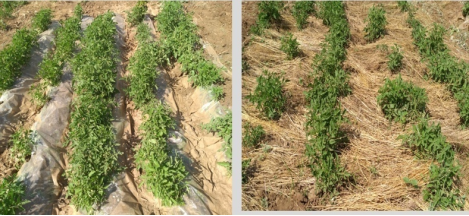
Figure 1. White Plastic and Grass Mulch Treatments.
3.5. Economic Analysis of Mulching Materials with Irrigation Methods on Tomato Production
The economic water productivity comparison of irrigation method (Conventional furrow irrigation, alternative furrow irrigation) with mulching materials was analyzed as Table 5 below.
Table 5. Partial Budget Analysis for Mulching Materials with Different Irrigation Methods.

Treatment

I. water (m3/ha)

AMY (Kg/ha)

TR (ETB/ha)

TVC (ETB/ha)

TFC (ETB/ha)

TC (ETB/ha)

NI (ETB/ha)

BCR

AFI+WPM

3845

23751

356265

29535

20000

49535

326730

6.60

AFI+GM

3845

26001

390015

21535

20000

41535

368480

8.87

AFI+NM

3845

19872

298080

21535

20000

41535

276545

6.66

CFI+WPM

7690

27378

410670

41070

20000

61070

369600

6.05

CFI+GM

7690

30312

454680

33070

20000

53070

421610

7.94

CFI+NM

7690

21564

323460

33070

20000

53070

290390

5.47

Note: AMY- adjusted marketable yield, TR-total revenue, TVC-total variable cost, TFC-total fixed cost, TC-total cost, NI-net income, BCR-benefit-cost ratio, AFI=alternative furrow irrigation, GM= grass mulch, WPW= white plastic mulch, CFI=conventional furrow irrigation and NM=no mulch.
Benefit-cost ratio (BCR) of each treatment was computed as the ratio of NI earned to the TC expended. Accordingly, maximum BCR (8.87) was obtained by alternative furrow irrigation with grass mulching treatment. This implies that even though the maximum yield was obtained by conventional furrow irrigation it was economically not more attractive due to water cost consumed by this irrigation method. The lowest BCR was obtained by conventional furrow irrigation with no mulch treatment (5.47). From this economic analysis alternative furrow irrigation with grass mulching treatment was the most economically attractive treatment with high BCR and optimum net benefit. Maximum total cost (61070 ETB) was consumed by conventional furrow irrigation with white plastic mulch treatment whereas the minimum total cost (41535 ETB) was obtained by alternative furrow irrigation with grass mulching and alternative furrow irrigation with no mulching treatment.
3.6. Conclusion and Recommendation
Now a day, improving water productivity is a current issue in the area where irrigation water is scarce, especially in arid and semi-arid areas. The study was conducted to evaluate the effect of different irrigation methods and mulching materials on water productivity, water retention and yield of tomato. This study revealed that application of mulching materials with different irrigation methods had significance difference on water productivity, water retention and yield of tomato. The finding shown that maximum water productivity was obtained by application of alternative furrow irrigation with grass mulch treatment. The result shown that, Minimum water productivity was obtained by conventional irrigation with no mulching treatment. From this result it is concluded that, application mulching, especially grass mulching on furrow irrigation a deciding factor for improving water productivity.
In terms of increasing water holding capacity of the soil, white plastic mulch with conventional furrow irrigation produce maximum water retention. From this result grass mulch produce maximum water retention next to white plastic mulch. Minimum water retention was obtained by alternative furrow irrigation method with no mulch treatments. So, its concluded that, mulching application in an irrigation practice have major role in improving water holding capacity of the soil. The economic analysis of this finding shown that, maximum benefit cost ratio (BCR) was obtained by alternative furrow irrigation with grass mulching treatment. Based on result obtained, application of grass mulch with alternative furrow irrigation method was recommended as best technology for improving irrigation water productivity. Grass mulch is also recommended for increasing tomato yield under furrow irrigation. Since grass mulch is applicable in both cost and availability, it should be practiced by all irrigation users.
Abbreviations

AFI

Alternative Furrow Irrigation

ANOVA

Analysis of Variance

CFI

Conventional Furrow Irrigation

CV

Coefficient of Variance

ETo

Reference Evapotranspiration

FAO

Food and Agricultural Organization

GM

Grass Mulch

LSD

Least Significant Difference

NM

No Mulch

WP

Water Productivity

WPW

White Plastic Mulch

Author Contributions
Lalisa Ofga: Data curation, Funding acquisition, Investigation, Methodology, Visualization
Ayela Tade: Conceptualization, Formal Analysis, Funding acquisition, Software, Writing – original draft, Writing – review & editing
Jamal Nur: Conceptualization, Data curation, Investigation, Methodology, Visualization
Conflicts of Interest
The authors declare no conflicts of interest.
References
[1] B. T. Aliabadi, M. R. Hassandokht, H. Etesami, and H. A. Alikhani, “Effect of Mulching on Some Characteristics of Tomato (Lycopersicon esculentum Mill.) under Deficit Irrigation,” vol. 21, pp. 927–941, 2019.
[2] A. Mukherjee, S. Sarkar, and P. K. Chakraborty, “Marginal analysis of water productivity function of tomato crop grown under different irrigation regimes and mulch managements,” Agric. Water Manag., vol. 104, pp. 121-127, 2012,
[3] A. Sarkar, “irrigation frequency and mulch ce pt us t,” vol. 5260, no. September, 2017,
[4] R. A. and Z. Tamiru, “Integrated Effect of Mulching and Furrow Methods on Tomato (Lycopersiumesculentum L) Yield and Water Productivity at,” vol. 9, no. 20, pp. 1-6, 2019.
[5] P. Kundu, N. K. Adhikary, M. Saha, A. Ghosal, and N. C. Sahu, “The Effects of Mulches on Tomato (Lycopersicon esculentum L.) in Respect of Yield Attribute in Ecosystem of Coastal Bengal,” vol. 35, no. 4, pp. 1-8, 2019,
[6] J. I. A. Hao et al., “Effects of biodegradable mulch on soil water and heat conditions, yield and quality of processing tomatoes by drip irrigation,” 2020.
[7] A. Muluneh, L. Stroosnijder, and S. Keesstra, “Adapting to climate change for food security in the Rift Valley dry lands of Ethiopia : supplemental irrigation, plant density and sowing date,” pp. 703-724, 2017,
[8] B. Berihun, “Effect of mulching and amount of water on the yield of tomato under drip irrigation,” vol. 3, no. July, pp. 200-206, 2011.
[9] O. and Selamawit, “Effect of Deficit Irrigation and Mulch on Field and Water Productivity of Tomato Under Drip Irrigation at Ambo,” vol. 12, no. 1, pp. 8-16, 2024.
[10] L. Goel, V. Shankar, and R. K. Sharma, “Effect of organic mulches on agronomic parameters - A case study of tomato crop (Lycopersicon esculentum Mill.),” pp. 297-307, 2020,
[11] J. Xu et al., “Effect of Regulated Deficit Irrigation on the Growth, Yield, and Irrigation Water Productivity of Processing Tomatoes under Drip Irrigation and Mulching,” 2023.
[12] I. Samui et al., “Yield Response, Nutritional Quality and Water Productivity of Tomato (Solanum lycopersicum L.) are Influenced by Drip Irrigation and Straw Mulch in the Coastal Saline Ecosystem of Ganges Delta, India,” 2020.
[13] Oiganji, “Vegetative Growth and Yield of Tomato as Affected by Water Regime and Mulching Oiganji Ezekiel *, O. I Jane**, H. O Sanusi***,” vol. 9, no. 2, pp. 43-53, 2019.
[14] H. Zhang, G. Huang, X. Xu, and Y. Xiong, “Estimating Evapotranspiration of Processing Tomato under Plastic Mulch Using the SIMDualKc Model,” pp. 1-18, 2018,
[15] A. Tagar, F. A. Chandio, I. A. Mari, and B. Wagan, “Comparative Study of Drip and Furrow Irrigation Methods at Farmer ’ s Field in Umarkot,” pp. 863-867, 2012.
[16] M. Abdul, M. Senge, and M. Abdul, “International Soil and Water Conservation Research Mulching type-induced soil moisture and temperature regimes and water use ef fi ciency of soybean under rain-fed condition in central Japan,” Int. Soil Water Conserv. Res., vol. 5, no. 4, pp. 302-308, 2017,
[17] M. Ayana, G. Teklay, M. Abate, and F. Eshetu, “Irrigation water pricing in Awash River Basin of Ethiopia : Evaluation of its impact on scheme-level irrigation performances and willingness to pay,” vol. 10, no. 6, pp. 554-565, 2015,
Cite This Article
  • APA Style

    Ofga, L., Tade, A., Nur, J. (2025). On Farm Evaluation of Mulching Materials and Irrigation Methods on Water Productivity and Yield of Tomato. Hydrology, 13(4), 234-241. https://doi.org/10.11648/j.hyd.20251304.13

    Copy | Download

    ACS Style

    Ofga, L.; Tade, A.; Nur, J. On Farm Evaluation of Mulching Materials and Irrigation Methods on Water Productivity and Yield of Tomato. Hydrology. 2025, 13(4), 234-241. doi: 10.11648/j.hyd.20251304.13

    Copy | Download

    AMA Style

    Ofga L, Tade A, Nur J. On Farm Evaluation of Mulching Materials and Irrigation Methods on Water Productivity and Yield of Tomato. Hydrology. 2025;13(4):234-241. doi: 10.11648/j.hyd.20251304.13

    Copy | Download

  • @article{10.11648/j.hyd.20251304.13,
      author = {Lalisa Ofga and Ayela Tade and Jamal Nur},
      title = {On Farm Evaluation of Mulching Materials and Irrigation Methods on Water Productivity and Yield of Tomato},
      journal = {Hydrology},
      volume = {13},
      number = {4},
      pages = {234-241},
      doi = {10.11648/j.hyd.20251304.13},
      url = {https://doi.org/10.11648/j.hyd.20251304.13},
      eprint = {https://article.sciencepublishinggroup.com/pdf/10.11648.j.hyd.20251304.13},
      abstract = {The primary production barrier in the arid and semi-arid regions of the eastern Hararghe zone is the issue of irrigation water scarcity. The objective of this study was to evaluate the effect of irrigation methods and mulching materials on water productivity, water retention and yield of tomato crop. The experiment was laid out in factorial design arranged in RCBD consisting of six treatments with three replication. The treatment combination were Conventional Furrow Irrigation with white plastic mulch (CFI+WPM), Conventional Furrow Irrigation with grass mulch (CFI+GM), Conventional Furrow Irrigation with no mulch (CFI+NM), alternative furrow irrigation with white plastic mulch (AFI+WPM), alternative furrow irrigation with grass mulch (AFI+GM) and alternative furrow irrigation with no mulch (AFI+NM). The finding shown that, Maximum yield (33.68 t/ha) was obtained by conventional furrow irrigation with grass mulch treatment while the lowest yield of 22.08 t/ha was obtained by alternative furrow irrigation with no mulch treatment. The study revealed that, Maximum water productivity (12.636 kg/m3) was obtained by application of alternative furrow irrigation with grass mulch treatment. Even though maximum yield was obtained by treatment of conventional furrow irrigation with grass mulch, irrigation water productivity of this treatment was not more attractive due to high consumption of irrigation water by conventional irrigation method. The economic analysis of this finding shown that, maximum benefit cost ratio (BCR) was obtained by alternative furrow irrigation with grass mulching treatment. In terms of increasing water holding capacity of the soil, white plastic mulch with conventional furrow irrigation produce maximum water retention. From the result minimum water retention was obtained by alternative furrow irrigation method with no mulch treatments. Based on result obtained, application of grass mulch with alternative furrow irrigation method was recommended as best technology for improving irrigation water productivity. Since grass mulch is applicable in both cost and availability, it should be practiced by all irrigation users.},
     year = {2025}
    }
    

    Copy | Download

  • TY  - JOUR
    T1  - On Farm Evaluation of Mulching Materials and Irrigation Methods on Water Productivity and Yield of Tomato
    AU  - Lalisa Ofga
    AU  - Ayela Tade
    AU  - Jamal Nur
    Y1  - 2025/12/26
    PY  - 2025
    N1  - https://doi.org/10.11648/j.hyd.20251304.13
    DO  - 10.11648/j.hyd.20251304.13
    T2  - Hydrology
    JF  - Hydrology
    JO  - Hydrology
    SP  - 234
    EP  - 241
    PB  - Science Publishing Group
    SN  - 2330-7617
    UR  - https://doi.org/10.11648/j.hyd.20251304.13
    AB  - The primary production barrier in the arid and semi-arid regions of the eastern Hararghe zone is the issue of irrigation water scarcity. The objective of this study was to evaluate the effect of irrigation methods and mulching materials on water productivity, water retention and yield of tomato crop. The experiment was laid out in factorial design arranged in RCBD consisting of six treatments with three replication. The treatment combination were Conventional Furrow Irrigation with white plastic mulch (CFI+WPM), Conventional Furrow Irrigation with grass mulch (CFI+GM), Conventional Furrow Irrigation with no mulch (CFI+NM), alternative furrow irrigation with white plastic mulch (AFI+WPM), alternative furrow irrigation with grass mulch (AFI+GM) and alternative furrow irrigation with no mulch (AFI+NM). The finding shown that, Maximum yield (33.68 t/ha) was obtained by conventional furrow irrigation with grass mulch treatment while the lowest yield of 22.08 t/ha was obtained by alternative furrow irrigation with no mulch treatment. The study revealed that, Maximum water productivity (12.636 kg/m3) was obtained by application of alternative furrow irrigation with grass mulch treatment. Even though maximum yield was obtained by treatment of conventional furrow irrigation with grass mulch, irrigation water productivity of this treatment was not more attractive due to high consumption of irrigation water by conventional irrigation method. The economic analysis of this finding shown that, maximum benefit cost ratio (BCR) was obtained by alternative furrow irrigation with grass mulching treatment. In terms of increasing water holding capacity of the soil, white plastic mulch with conventional furrow irrigation produce maximum water retention. From the result minimum water retention was obtained by alternative furrow irrigation method with no mulch treatments. Based on result obtained, application of grass mulch with alternative furrow irrigation method was recommended as best technology for improving irrigation water productivity. Since grass mulch is applicable in both cost and availability, it should be practiced by all irrigation users.
    VL  - 13
    IS  - 4
    ER  - 

    Copy | Download

Author Information
  • Oromia Agricultural Research Institute, Fadis Agricultural Research Center, Harar, Ethiopia

  • Oromia Agricultural Research Institute, Fadis Agricultural Research Center, Harar, Ethiopia

  • Oromia Agricultural Research Institute, Fadis Agricultural Research Center, Harar, Ethiopia

  • Abstract
  • Keywords
  • Document Sections

    1. 1. Introduction
    2. 2. Materials and Methods
    3. 3. Result and Discussion
    Show Full Outline
  • Abbreviations
  • Author Contributions
  • Conflicts of Interest
  • References
  • Cite This Article
  • Author Information